Healthy Aging
By Kathleen Doheny 1 Comment Share This:
Breaking a bone as an adventurous kid climbing trees or jumping off a roof may have been viewed as a badge of bravery. A fracture after 60 can be painful bad news—and signal unhealthy bones.
To learn about how to assess your bone health and keep bones as strong as possible, we reached out to Laila Tabatabai, MD, vice president of the board of directors of the Bone Health and Osteoporosis Foundation, clinical endocrinologist on staff at Houston Methodist Hospital and associate professor of clinical medicine at Weill-Cornell Medical College, New York, and other reputable sources.
Statistics
How unhealthy are our bones? “About 10 million people over age 50 have osteoporosis (“porous bones”) in the U.S., and it’s growing,” Tabatabai says. “Close to 45 million additional individuals have low bone mass, which we also term osteopenia.”
Screening
So who needs a bone test and when?
Guidelines on screening differ—the U.S. Preventive Services Task Force (USPSTF) recommends screening women at age 65 and women younger than 65 judged to be at increased fracture risk. It doesn’t recommend universal screening for men, finding evidence insufficient to assess benefits and harms.
But Tabatabai and others say that risk assessment should begin earlier and be more inclusive. The Bone Health and Osteoporosis Foundation recommends women 65 and over and men 70 and over have a bone density test, as well as anyone over age 50 who has broken a bone. Women 50 to 64 and men 50 to 69 with risk factors (family history of osteoporosis, smoking, frequent falls, for instance) should also be screened.
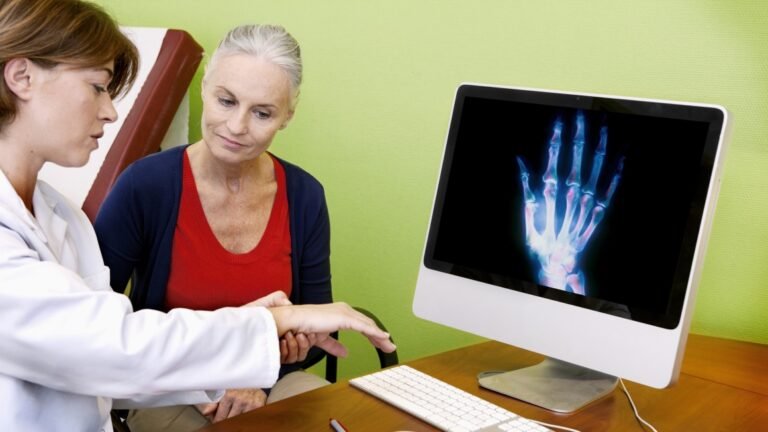
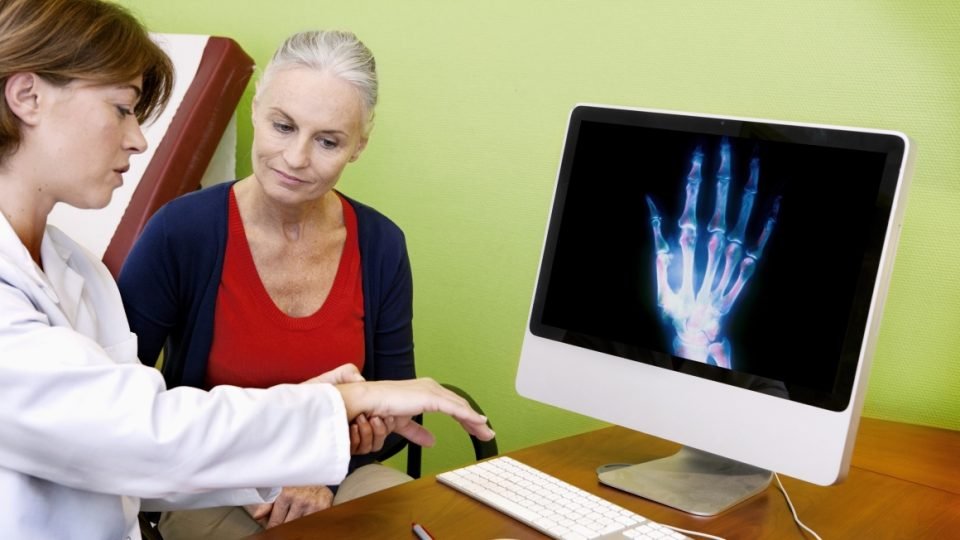
Screening with a bone density test, typically a dual-energy Xray absorptiometry test or DXA, takes just a few minute. You lie on a table as a movable arm scans your bones.
Did You Pass?
The bone density test produces a T-score—how your bones shape up compared to a young, healthy adult of 30, Tabatabai says. It also yields a Z-score. “This compares your bone density to those of the same age, sex and size as you,” she says.
Z scores are helpful for those under 50, as they’re used to diagnose low bone density for age, she says.
For older adults, the T score is the focus as it is predictive of fracture risk. A T score of minus 1.0 or higher is normal. A score of -1.1 to minus 2.4 is low bone mass; -2.5 or below is osteoporosis. “The categories are important,” she says. “The more severe your condition, the more proactive you want to be.”
Taking Action
To preserve bone health if yours isn’t up to par requires a 3-prong approach, Tabatabai says.
Nutrition—“Calcium intake is critical,” she says. She recommends 1,000 to 1,200 milligrams of total calcium a day, and more than half should come from food, not supplements. Here’s a chart of which foods give you how much calcium.
In some people, too much calcium gotten from supplements can lead to kidney stones and other problems. Here are her notes on handling this:
“The best way to prevent kidney stones is hydration, hydration, hydration. Drinking non-caffeinated beverages to maintain a clear to light-yellow urine throughout the day. For anyone prone to kidney stones or with a family history of kidney stones, they should see a urologist for specific recommendations.”
Obtaining calcium from food sources appears to be lower risk for causing kidney stones than calcium supplements.
Vitamin D3 supplementation is important, too, and she recommends checking 25-hydroxyvitamin D levels. “I aim for a goal of 40-60 [nanograms/milliliter] for optimal bone health.” Experts differ on the optimal vitamin D blood levels, as this report demonstrates. (RDAs for Vitamin D is 600 IUs for people age 1 to 70 and 800 IUs for those 70 and older, but talking to your doctor for a personalized recommendation is best.)
Exercise—“We know high-intensity resistance exercise and weight bearing exercise increase osteogenic loading,” Tabatabai says, “so bone mineral density will be improved and increased.” The best regimen is created with your doctor, she says, as it will depend on the status of your bones, your overall health and stamina and other factors.
Medications—Medications can help, and the thinking on how long and when to take these has evolved. Some osteoporosis medications build bone; others stop bone loss. Here is a rundown of options. Because the risk of developing what’s known as an atypical femoral fracture—a break in your thigh bone—tends to increase the longer you take one type of medication, bisphosphonates, your doctor may suggest a “drug holiday.” So just because you start an osteoporosis medication doesn’t mean you’ll take it forever.
Tabatabai consults for Amgen and Kyowa Kirin.
 Kathleen Doheny is a Los Angeles-based independent journalist, specializing in health, behavior, fitness and lifestyle stories. Besides writing for Senior Planet, she reports for WebMD, Medscape, MedCentral and other sites. She is a mom, mother-in-law and proud and happy Mimi who likes to hike, jog and shop.
Photo of Kathy Doheny: Shaun Newton
This article offered by Senior Planet and Older Adults Technology Services is for informational purposes only and is not intended to substitute for professional medical advice, diagnosis, or treatment. Always seek the advice of your physician or other qualified health provider with any questions you may have regarding any medical condition. If you think you may have a medical emergency call 911 immediately.